The United Kingdom’s construction sector continues to evolve with growing demand for sustainable, durable, and energy-efficient buildings. However, the UK’s cold climate, frequent rainfall, strong winds, and fluctuating temperatures create several performance challenges for modern facades. Commercial towers, mixed-use developments, hospitality projects, and public infrastructure increasingly require facade systems that can withstand harsh environmental conditions while maintaining long-term reliability and occupant comfort.
Today, facades are expected to do far more than provide architectural appeal. They play an essential role in protecting buildings against moisture intrusion, improving thermal performance, enhancing structural stability, and supporting sustainability goals.
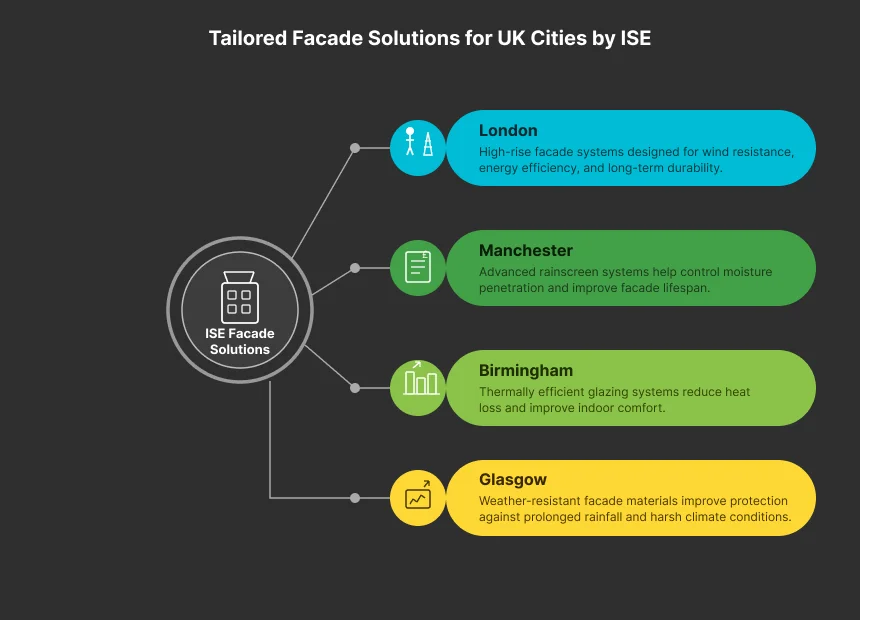
Buildings across cities such as London, Manchester, Birmingham, and Glasgow are exposed to prolonged wet weather and varying seasonal temperatures throughout the year. If facade systems are not properly designed and engineered, these environmental conditions can lead to:
High-rise structures also face additional stress from wind pressure and building movement, making facade performance a critical consideration during both design and construction stages.
As sustainability standards become stricter across the UK construction industry, developers and architects are placing greater emphasis on building envelopes that improve energy efficiency without compromising durability.
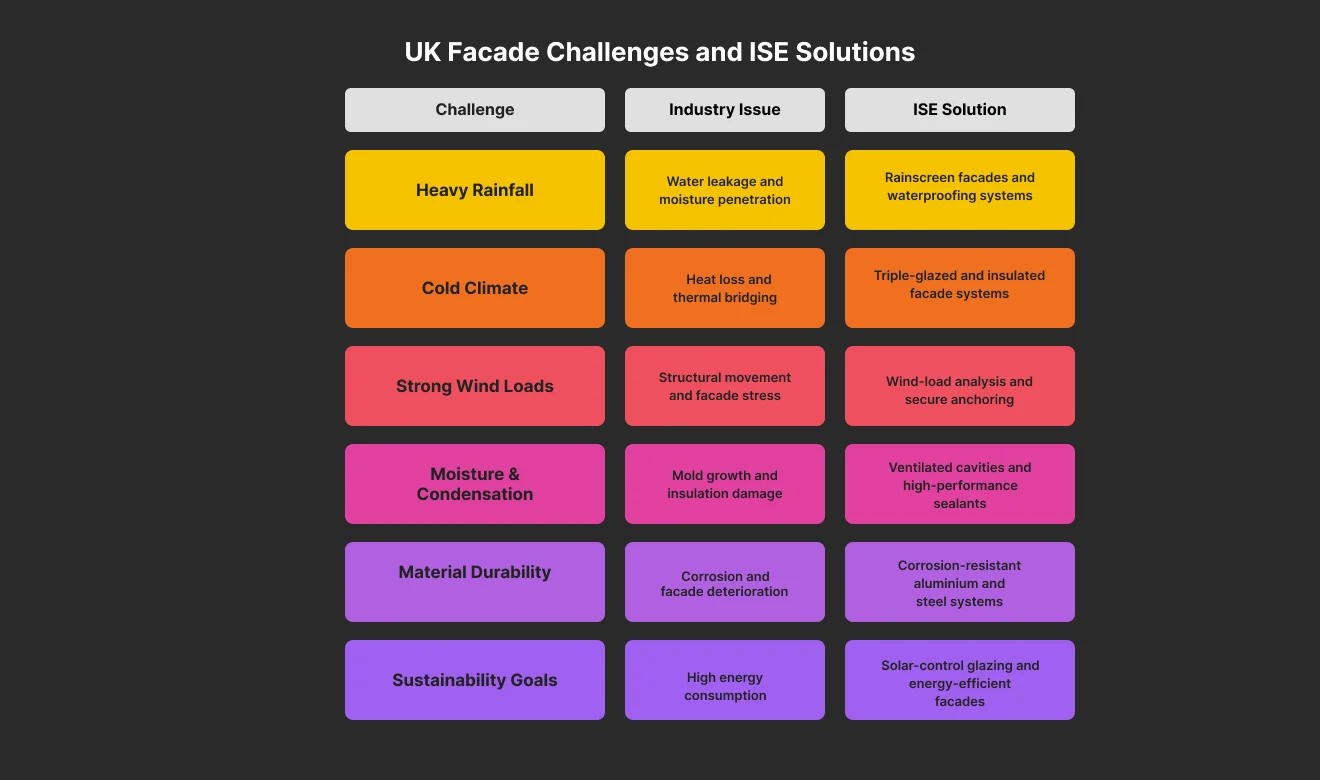
One of the most common issues in UK buildings is water infiltration caused by continuous rainfall and wind-driven moisture. Poor drainage systems, weak sealing details, and low-performance cladding materials can allow moisture to penetrate the building envelope over time.
This may result in:
Modern facade systems address these challenges through advanced moisture management strategies such as rainscreen assemblies, proper ventilation cavities, waterproofing layers, and high-performance sealants. These solutions help improve weather resistance while extending the lifespan of the building facade.
Energy efficiency has become a major priority for commercial construction projects throughout the UK. Buildings with poorly performing facades often experience excessive heat loss during colder months, leading to increased energy consumption and reduced indoor comfort.
To improve thermal performance, modern facade engineering solutions commonly integrate:
These solutions help reduce thermal bridging, maintain indoor temperature stability, and improve overall building efficiency. Sustainable facade strategies also support environmental targets and help reduce long-term operational costs.
Tall commercial buildings across the UK are regularly exposed to strong wind loads and structural movement. Facade systems that are not properly engineered for these conditions may experience excessive deflection, water leakage, or long-term performance issues.
Detailed wind load analysis and structural assessments are essential to ensure:
Advanced modelling and simulation tools are increasingly used during the design stage to evaluate how facade systems will behave under varying environmental conditions.
Material selection is another important factor in achieving durable building facades in the UK climate. Constant exposure to moisture and changing temperatures can significantly affect the lifespan and performance of facade components.
Durable facade materials commonly used in modern projects include:
Selecting suitable materials not only improves durability but also reduces long-term maintenance requirements and operational disruptions.
ISE Group supports architects, developers, contractors, and engineering consultants with specialized facade engineering solutions tailored for challenging climate conditions. With expertise in facade consulting, structural analysis, BIM coordination, performance evaluation, and sustainable design strategies, ISE helps project teams improve durability, thermal performance, and long-term building efficiency.
From concept design and technical detailing to performance analysis and construction-stage support, ISE delivers practical and high-performance facade solutions for commercial towers, hospitality developments, mixed-use buildings, and large-scale infrastructure projects.
As modern buildings become more sustainability-focused and performance-driven, facade engineering continues to play an increasingly important role in the UK construction industry. Well-engineered facades help improve weather resistance, energy efficiency, occupant comfort, and long-term asset value.
By combining climate-responsive design strategies, durable materials, and advanced engineering practices, modern facade systems are helping shape the future of resilient and energy-efficient buildings across the UK.